25 August 2026
The problem isn't that young people don't want to read
The literacy statistics deserve attention, but they shouldn't lead us to despair.
The Problem Isn't That Young People Don't Read
Every few months another headline appears warning that literacy is in decline and that young people are reading less than previous generations. I’ve been seeing a lot in my various social media feeds about a real challenge in this regard in the USA.
The statistics are certainly concerning.
The National Assessment of Educational Progress (NAEP), often described as the United States' report card, found that reading scores for both fourth and eighth grade students declined again in 2024. Only 31% of fourth graders and 30% of eighth graders performed at or above the NAEP Proficient level in reading, with results continuing a downward trend seen since 2019. Recent assessments also show that reading performance among twelfth-grade students is at its lowest recorded level.
It's easy to look at figures like these and conclude that young people simply don't like reading anymore. We think that's the wrong conclusion.
Because when you look beyond the statistics, a different question emerges. What if the issue isn't reading itself? What if it's what we're asking people to read?
The Difference Between Reading and Wanting to Read
Most adults can remember at least one book they were forced to read at school. For some, it became a lifelong favourite. For many others, it became an obstacle to overcome. The challenge with any standardised curriculum is that it assumes one story can engage everyone equally, but with a bit of reflection that’s a bit absurd.
One child wants dragons.
Another wants football.
Another wants science fiction.
Another wants graphic novels.
Another wants stories about people who look and sound like them.
Reading isn't a single hobby. It's thousands of hobbies hiding inside books. When we reduce reading to a list of prescribed texts, we risk turning discovery into obligation.
Reading Should Be Enjoyable
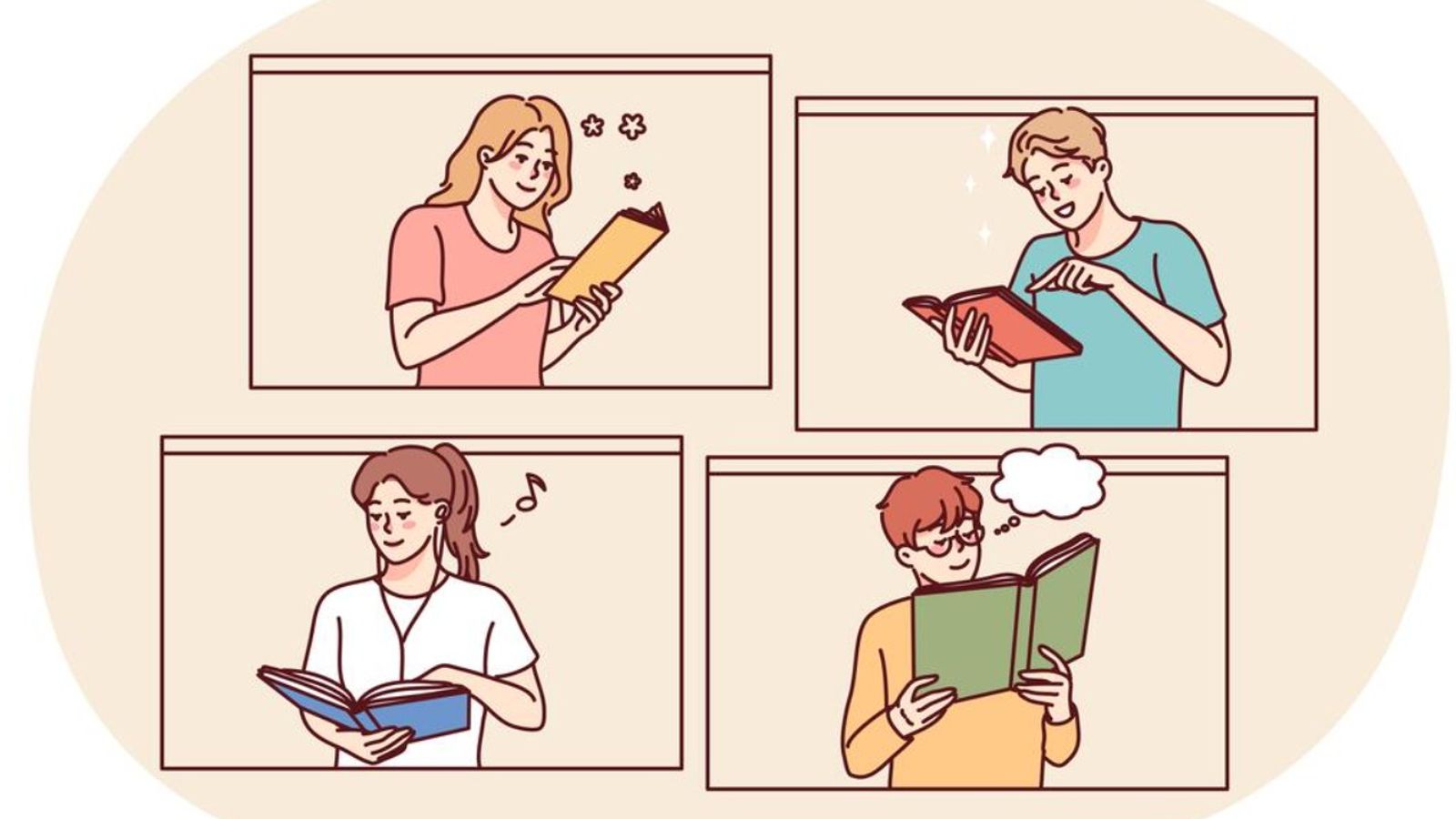
We don't learn to love music by listening to only one genre. We don't learn to enjoy food by eating the same meal every day. Yet when it comes to reading, we sometimes behave as though there is a narrow list of books that count. The reality is that a teenager absorbed in manga is reading. A child racing through books about dinosaurs is reading. Someone devouring fantasy novels late into the night is reading. A young person following a series of graphic novels is reading.
Stories Build Readers
The goal shouldn't be to make every young person read the same book. The goal should be to help every young person find their book. The one they can't put down. The one they read under the duvet with a torch long after they're supposed to be asleep. Reading stops being homework. It becomes curiosity. And curiosity is remarkably difficult to extinguish.
A young reader who discovers a passion for fantasy may eventually explore mythology, history and literature. A child who starts with football biographies may move on to journalism, psychology and business. Reading journeys rarely begin where they end.
Libraries, Bookshops and Choice
This is why access matters.
Libraries matter.
Independent bookshops matter.
Schools that provide choice matter.
Parents who allow children to read what interests them matter.
Every reader's path is different.
A More Optimistic View
The literacy statistics deserve attention, but they shouldn't lead us to despair.
They should remind us that reading is not simply a skill to be measured. It is a relationship to be nurtured. If we want more readers, we need more choice.
More stories, more voices. More opportunities for young people to encounter books that reflect their interests, ambitions and imaginations. Because the future of reading may not depend on getting everyone to read the same thing. It depends on helping everyone find something they love reading.
And that feels like a much more hopeful place to start.