7 September 2026
Chain up the books!
The chains in Wimborne weren't there because books were useless. They were there because books were valuable.
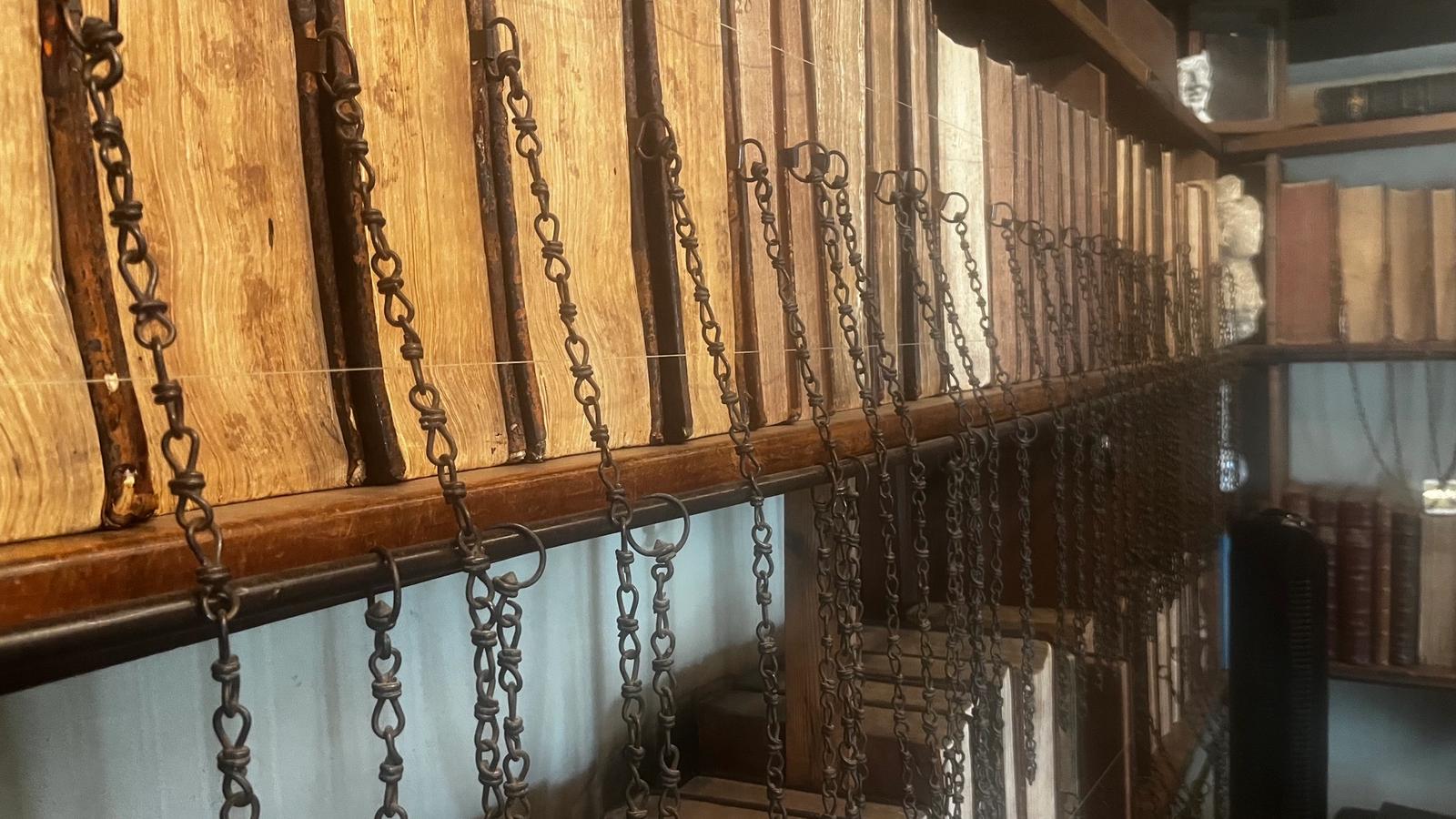
I recently discovered that lots of hotels allow you to take your dog with you, even if said dog is a completely bonkers Sprocker. This newly acquired knowledge has opened up the one night away mini-adventure possibilities significantly. So, a few hours later I found myself in Wimborne Minster – it being that magic combination of within a couple of hours drive and within budget. I hadn’t done any research on the place, so discovering something that I thought only existed in fantasy novels was a genuine surprise: a chained library.
Chained libraries are exactly what they sound like: rows of books attached to shelves with metal chains, designed to stop anyone wandering off with them. The library at Wimborne Minster is one of only five chained libraries left in the UK. It is accessed via a left-handed spiral staircase — common in medieval buildings because it favoured a right-handed defender — and contains hundreds of dusty, leather-bound treasures.
Standing there looking at books that had been physically restrained for centuries, I found myself wondering what the original librarians would make of our current relationship with books.
Back then, books were rare. Precious. Expensive. A single volume might represent months of work by scribes and craftsmen. If one disappeared, replacing it wasn't as simple as clicking "Buy Now".
So they chained them up. Not because they hated readers, but because they loved books.
The irony, of course, is that we now live in an age where books have never been more plentiful. Millions of titles are available instantly. Entire libraries fit in our pockets. We have solved the scarcity problem so thoroughly that it is easy to forget that books were once among humanity's most valuable possessions.
And yet here we are, arguing about books again.
Recent reports about AI companies purchasing books in bulk, scanning them, and in many cases destroying the originals in the process have sparked understandable outrage. The legal questions are complicated. The ethical questions less so.
Books are not just containers of information. Excel is a container of information, but I’m not about to curl up with a pivot table on holiday.
A book is an object that has travelled through time. It has been written, edited, printed, transported, shelved, discovered and loved. It carries fingerprints, coffee stains, dog-eared pages and occasionally the shopping list someone used as a bookmark in 1997.
Scanning a book may preserve its words. It doesn't preserve the book.
Walking through the chained library, I found myself smiling at the thought that perhaps those medieval librarians had the right idea all along. Maybe we need to bring the chains back.
Not to stop people reading books.
Quite the opposite.
Perhaps we need symbolic chains that remind us these things matter. That books are more than datasets. More than training material. More than content.
The chains in Wimborne weren't there because books were useless. They were there because books were valuable.
That's a distinction worth remembering.
At Literatea, we're obviously biased. We think books are among humanity's greatest inventions. But standing in that centuries-old library, surrounded by volumes that generations had gone to extraordinary lengths to preserve, it struck me that every age faces the same challenge.
Not how to store books.
Not how to copy books.
But how to value them.
The chains may be gone from most libraries.
The responsibility isn't.